After your child has been through a mental health crisis or a long period of struggle, the crisis may end before your worry does. Many parents find themselves still watching, bracing and waiting for the next hard thing, even when life has become calmer.
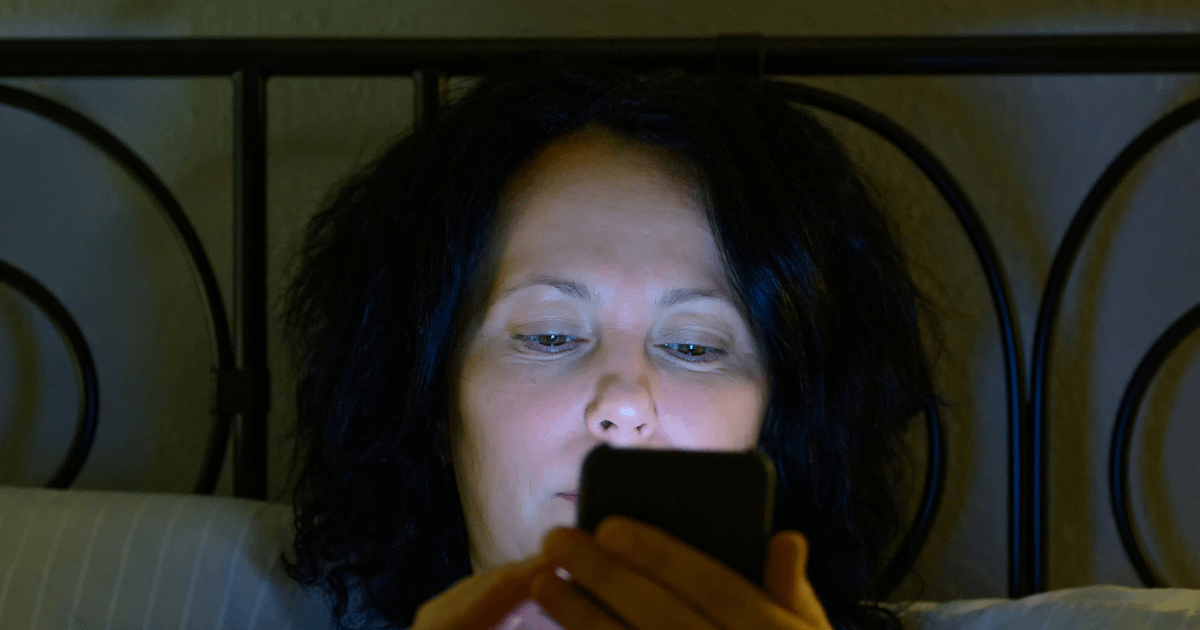
I am always amazed when people say they turn their phones off at night because that hasn’t been an option for me in a long time.
When you have had a child who has struggled, especially once that child is living away from home, you make sure you are always available. So, my phone stays powered on, volume up beside me at night. Most of the time, nothing happens. And while I know that a late-night call or text can rattle almost any parent, I don’t know that it causes the immediate rush of adrenaline and chest clenching that it does for some of us.
And then I look and discover that one of my college-age kids wants me to order them something from Amazon or has sent me a TikTok they apparently thought I needed to see immediately.
I can roll my eyes afterward. But that initial reaction is real.
I don’t think there was one particular crisis that created it. For our family, it came from spending a long period of time when it felt as though we were moving from one difficult thing to another. At some point, we become accustomed to being on alert.
When my kids still lived at home, there were so many things I watched without even realizing I was watching them. I noticed how much they were sleeping, how much time they spent in their rooms, the tone of an answer, how easily they became frustrated. I wondered whether irritability was just normal teenage moodiness or a sign that something bigger was going on. A bad day could be a bad day, but when you have seen a bad day become something much harder, you tend to look for a bigger story of what might be underneath it.
Now that my kids are older and away at college, I don’t have those daily visual cues. Instead, I find myself preparing for the times I know may be harder, like the beginning of a semester, exams, a relationship problem, a message about wanting to come home.
Of course, none of these things necessarily means a crisis is coming. College students get stressed during exams. Relationships evolve. People get homesick. Most of the time, they work through those experiences in exactly the way we hope they will. But knowing that doesn’t stop me from bracing myself.
I think that is one of the things we don’t talk about enough when you have parented a child through a difficult period. The crisis may end, but the parent doesn’t necessarily return to who they were before it happened.
After you have spent months, or sometimes years, dealing with one hard thing after another, calm can become surprisingly difficult to trust. You want to enjoy it. You are grateful for it. But there is also a little voice reminding you that things have been good before, right before they weren’t. It can almost feel risky to relax too much, as though acknowledging that things are going well might somehow jinx it. You know that isn’t rational, but you also know from experience that life can change quickly.
My husband will say, “We have had an experience,” and experience is a powerful teacher. Some of the vigilance we develop as parents has served a purpose. When a change in behavior really does mean something, and someone needs to step in. That’s what makes it so complicated. We can’t simply tell ourselves that all of our worry is unnecessary. We have a reason to watch closely, because our experience tells us too. The harder task is figuring out when that vigilance is helping us and when it is pulling us into a crisis that may not actually be happening.
I think cell phones have made that even more complicated. When I was growing up, if something upsetting happened while I was in college 14 hours away from home, there was always a delay before my parents heard about it (if they heard about it at all). I might talk to a friend first, or I would have to wait until I got to my dorm or apartment where I could make a call. In that space of time, things often changed. I got more information. I calmed down. I figured something out. Maybe the thing that felt enormous at 2:00 in the afternoon felt much more manageable by the time I talked to my parents that evening.
Our kids can now reach us in the exact moment something happens, and in many ways, that is great. I want my kids to know they can call me when they need me. I am grateful they have a way to reach me immediately if something is really wrong. But it also means we sometimes get our kids’ feelings before they have had any time to process them. We have a live feed of every emotion, challenge, and experience they are having in real time. And yes, sometimes this includes the joys and successes, but for some reason, we often learn about those much later.
Whether it is a relationship that is falling apart, something went badly at school, they are furious with a friend, or they just can’t handle one more thing. They can text or call while those feelings are at their biggest.
Then they keep living their life. They talk to their roommate. They get new information. They go to class. They sleep. They make up with the person they were fighting with. They realize there is another option. They work through the feeling, which is exactly what young adults are supposed to learn how to do.
The problem is, after we get that big emotional text or call, the line goes silent. They may have gone from a 10 to a 4, and meanwhile, we are still sitting at a 10 because we have no idea what has happened once the text messages stop.
I have had this happen more times than I can count. A child calls upset about something, and I immediately shift into worry mode. Sometimes I move quickly past worry and straight into fix-it mode. I start thinking about what needs to happen, what I could do, what might go wrong next.
Then nothing. My child moves on to whatever happens next in their day, but I am left holding the version of the problem they handed me during the 1-minute phone call or 3 text messages. I can re-play it for hours. It can derail just about whatever I was doing. And because our family has been through some very hard things, my mind doesn’t have much trouble imagining where a difficult situation could lead. Worst-case scenarios come surprisingly easily once you’ve lived through a few of them.
I also think there is something very parental, and maybe especially maternal for many of us, about wanting to jump in and take the pain away. When our kids struggle, our instinct is often to make it better. We want to solve the problem, reduce the hurt, find the answer, or remove whatever is causing the distress. I would score a perfect 10 if I were scored on how well I can dive into a problem before I have stopped to ask whether anyone actually needs me in there.
As my kids have gotten older, I have had to learn for myself that being available to them is not the same as fixing everything for them. Sometimes they want advice, sometimes they need us to take action. But most of the time, they just need someone safe to hear them while they are having a hard moment.
One of the simplest things I’ve learned to ask is, “Can you help me understand what would help you most right now?” The answer gives me a chance to understand what is actually being asked of me before I start solving. It also gives my kids a chance to think about what they need. And sometimes what they need most is to know that I trust them to handle something difficult.
There is also an important difference between giving a child room to work through something and ignoring a real safety concern. If I am worried about my child’s safety, or believe they may be in a true mental health crisis, I am not going to sit back and wait for them to process it. There are times when parents need to act, ask direct questions, get professional help, or respond to an emergency.
The challenge for us is that not every painful feeling is that kind of emergency. I think I have gotten better at telling the difference, although I am certainly not perfect at it. Unfortunately, this is one of those areas where having a lot of reps helps.
I am better now at taking a breath before I respond. I try to listen long enough to understand what is actually happening instead of immediately jumping ahead to what I fear might happen. I ask what they need. If the conversation ends and I am still concerned, I can follow up later instead of assuming that silence means the situation is exactly as bad as it was when we last spoke. But damn if that silence isn’t hard.
Perhaps most importantly, I am learning to separate two thoughts that used to become tangled together very quickly.
My child is having a really hard time right now.
And:
Here we go again.
Those aren’t necessarily the same thing.
I don’t think that the vigilance will ever disappear completely. I suspect that some of it has just become who I am after parenting through something difficult. But I am trying to get better at recognizing my own internal alarm system and taking a breath before deciding what that alarm really means. Our kids can be struggling without being in crisis. They can have a terrible day without it becoming a terrible month. They can feel something intensely and then figure out how to move through it.
And when they really do need us, we can still be there.
I am probably never going to be the person who turns off her phone at night. That part of me may have been permanently changed by what our family has been through.
But I am trying to find a way to get better at hearing the phone ring or the ding of a new text message without immediately assuming the worst is waiting on the other end. And if it is just a silly TikTok, I will watch it and breathe a sigh of relief… but I still probably won’t be getting back to sleep anytime soon.
– Laurie
Check out my other posts on
When Everyone Has an Opinion When Your Child is Struggling

Laurie Hinnant is a parent who spent years navigating the professional support system for her family, and found it far more confusing, inconsistent, and exhausting than it needed to be. She founded Together We Navigate to give other parents the real-talk guidance she wished she’d had. She also holds a PhD in Community Psychology and brings 25 years of health research experience to everything she writes, but she writes here as a parent first.